Skip to main content

Gold ETF vs Physical Gold – Which is Better in 2026?

7 min read30 Jun 2025

Gold ETF vs Physical Gold – Which is Better in 2026?

For generations, gold has been more than just an investment it’s a tradition. From jewellery to festive gifts, gold holds emotional and cultural significance in Indian households. But times have changed and so have the ways to invest in this precious metal.

Today, many investors are turning to Gold Exchange-Traded Funds (ETFs) as a modern alternative to physical gold. If you're wondering which is better buying gold the traditional way or opting for a digital route this guide is for you.

Let’s break down both options in terms of performance, cost, convenience, and more so you can make an informed decision.

Gold ETFs and Physical Gold at a Glance

FeatureGold ETFsPhysical Gold
FormDigital units on stock exchangesCoins, bars, or jewellery
How to InvestThrough Demat and trading accountVisit a jeweller
StorageNo need—held electronicallyNeeds a secure place (locker/home safe)
LiquidityHigh – can be traded during market hoursModerate – depends on jeweller or buyer
PurityStandardised (usually 99.5%)May vary, especially with jewellery
Minimum InvestmentAs low as one unit (1 gram of gold)Based on denomination or weight

For a detailed understanding of ETFs, learn more at What is Gold ETF

Gold ETF vs Physical Gold Cost Breakdown

1. Expense Ratio

Gold ETFs charge a relatively small annual expense ratio for managing the fund. This fee is deducted from the fund’s returns.

2. Making Charges (Physical Gold)

Jewellery often comes with making charges, which are non-refundable when you sell. That’s a major dent in your investment value.

3. GST

Gold ETFs: Exempt from GST
Physical Gold: GST is applicable

4. Storage Costs

  • ETFs don’t require any physical storage.
  • Physical gold may involve locker rent or home security systems.

In terms of cost efficiency, Gold ETFs like Kotak Gold ETF provides a cost-efficient investment option by offering exposure to gold without the associated costs of physical storage or making charges.

Gold ETF vs physical gold Liquidity & Convenience

AspectGold ETFsPhysical Gold
Buy/Sell ProcessOnline via trading platformRequires physical visit to a jeweller
LiquidityHigh – traded during market hoursSelling physical gold can be less straightforward, often requiring purity assessments and possibly incurring deductions due to making or processing costs.

Gold ETFs make it easy to enter and exit your investment ideal for today’s fast-paced financial world.

Gold ETF vs Physical Gold - Purity, Safety & Insurance Considerations

When it comes to purity and peace of mind, Gold ETFs are far more transparent.

  • ETFs are backed by standardised 99.5% pure gold.
  • Physical gold especially jewellery can sometimes fall short on purity. Also, there's always the risk of theft or damage.

Additionally, ETFs are held securely in custodial vaults, covered by insurance. With physical gold, you bear the responsibility for security and any insurance costs.

Taxation Rules (FY 2025–26)

The tax treatment for different forms of gold investment generally follows similar principles. To understand how your gains may be taxed, refer to Kotak’s tax reckoner.

Risks and Considerations Before You Invest

Gold ETFs

  • Require a Demat and trading account.
  • May experience minor tracking errors a small deviation from actual gold price.
  • Some ETFs may have lower liquidity if not actively traded.

Physical Gold

  • Risk of theft, misplacement, and purity issues.
  • High transaction costs (GST + making charges).

Key Takeaways

  • Gold ETFs offer better transparency, relatively lower cost, higher liquidity, and minimal hassle suitable for modern investors.
  • Physical gold still holds sentimental value and is ideal for gifting or personal use, but isn’t the most cost-efficient investment.
  • Both Gold ETFs and physical gold can complement each other in a diversified portfolio, depending on your financial goals and risk appetite. To learn how to strike the right balance, explore gold allocation in portfolio.

Conclusion

Choosing between Gold ETFs and physical gold ultimately comes down to your financial goals and preferences. If you're seeking an efficient, relatively low-cost, and transparent way to invest in gold, Gold ETFs offer a compelling option suitable for modern investors who value liquidity and convenience. On the other hand, physical gold may still appeal to those who treasure its emotional value and prefer to hold it in tangible form.

If you’re exploring other gold investment options, you might also be interested in understanding the differences between gold ETF vs gold mutual fund or evaluating sovereign gold bond vs gold ETF. Each product offers unique features, benefits, and tax implications so take the time to compare and align them with your overall portfolio strategy.

Whatever you choose, gold remains a powerful tool for diversification and wealth preservation over long term just be sure to invest wisely.

FAQS

There’s no universal answer to whether Gold ETFs are better than physical gold it really depends on individual goals, preferences, and circumstances
Gold ETFs are more liquid. You can sell them instantly on the stock exchange during trading hours at market price. In contrast, selling physical gold coins may involve haggling, purity checks, and lower buyback rates at local jewellers making the process slower and less transparent.
Yes, most gold ETFs in India are backed by 99.5% pure (24-karat) physical gold, securely held in vaults with a custodian. They are regulated and regularly audited to ensure that the gold actually exists and matches the ETF’s holdings.
Not usually for small investors. Some gold ETFs may offer physical redemption, but it typically requires a large quantity. Most retail investors prefer to redeem in cash due to convenience. Always check the conversion policy with the ETF provider.
Most gold ETFs in India are structured such that 1 unit represents 1 gram of gold. However, this can vary slightly by fund based on tracking error and expenses. Always check the ETF’s fact sheet for precise unit-to-gram details.
As mentioned earlier, conversion is possible only in select ETFs and usually requires a high minimum quantity. For most retail investors, the ETF is redeemed in cash based on the current gold price.
- No physical delivery for small quantities - Requires a Demat account - Management fees (expense ratio) - Dependent on stock market hours for trading That said, these are often outweighed by convenience and lower costs compared to physical gold.
Yes, gold ETFs can be bought or sold any time during market hours, just like shares. You can withdraw (sell) your investment whenever you need liquidity, making them a highly flexible gold investment option.

Disclaimers:

Kotak Gold ETF
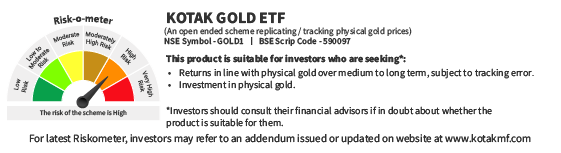
KOTAK GOLD ETF.webp

Investors may consult their Financial Advisors and/or Tax advisors before making any investment decision.

These materials are not intended for distribution to or use by any person in any jurisdiction where such distribution would be contrary to local law or regulation. The distribution of this document in certain jurisdictions may be restricted or totally prohibited and accordingly, persons who come into possession of this document are required to inform themselves about, and to observe, any such restrictions.

Mutual Fund investments are subject to market risks, read all scheme related documents carefully.

Comments (0)

Share your Opinion

Start the conversation and be the first voice of this Article.